GREVISION / TECHNOLOGY DECISIONS
.NET or Node.js for your application backend?
Choose a backend around the work it needs to perform and the people who will operate it. Start with user roles, data ownership, integrations and the expected request patterns. A C# application built on .NET and a JavaScript or TypeScript application running on Node.js can be evaluated against the same acceptance criteria. Neither ecosystem removes the need to design permissions, data consistency, testing and production operation.
Compare the project requirements
| Decision | .NET / ASP.NET Core | Node.js |
|---|---|---|
| Team and language | Review C# experience and the fit with existing .NET code and services. | Review JavaScript/TypeScript experience and the fit with existing Node.js services. |
| Web API approach | ASP.NET Core supplies web application and API building blocks. | Choose the application framework, validation and authentication approach for the Node.js runtime. |
| Workload design | Plan asynchronous I/O, background jobs and resource limits for the workload. | Keep request handling responsive; avoid blocking the event loop with lengthy work. |
| Operation | Agree deployment, runtime updates, logging and recovery procedures. | Agree the same operational responsibilities, including dependencies and runtime updates. |
The linked documentation describes platform capabilities. The planning questions and recommendations below are Grevision's guidance for discussing your project.
Map the workflows before comparing runtimes
List the operations that must be reliable: a reservation, a payment record, stock adjustment or a report. Identify where data is authoritative, who may change it and what should happen when an integration fails. Include API consumers, file processing and scheduled work. Those requirements let us discuss transaction boundaries, retries and background processing without assuming the language itself makes a workflow correct.
Investigate the expensive or uncertain operation
If a workflow processes large files, performs substantial computation or waits on external services, isolate that operation and agree a representative test. For Node.js, the official guidance stresses avoiding long blocking work on the event loop. With either approach, we would evaluate the actual implementation, workload and deployment limits. We do not publish a universal speed ranking or infer your infrastructure cost from the runtime name.
Consider the existing system and its maintainers
Share the current repositories, service contracts, database requirements and deployment environment. An existing .NET or Node.js system may be a sensible base to extend. A proposed replacement needs a migration plan, compatibility expectations and a way to check important behaviours. Agree how your team receives the source, operating instructions and support responsibilities before choosing a new stack.
Inspect a relevant project
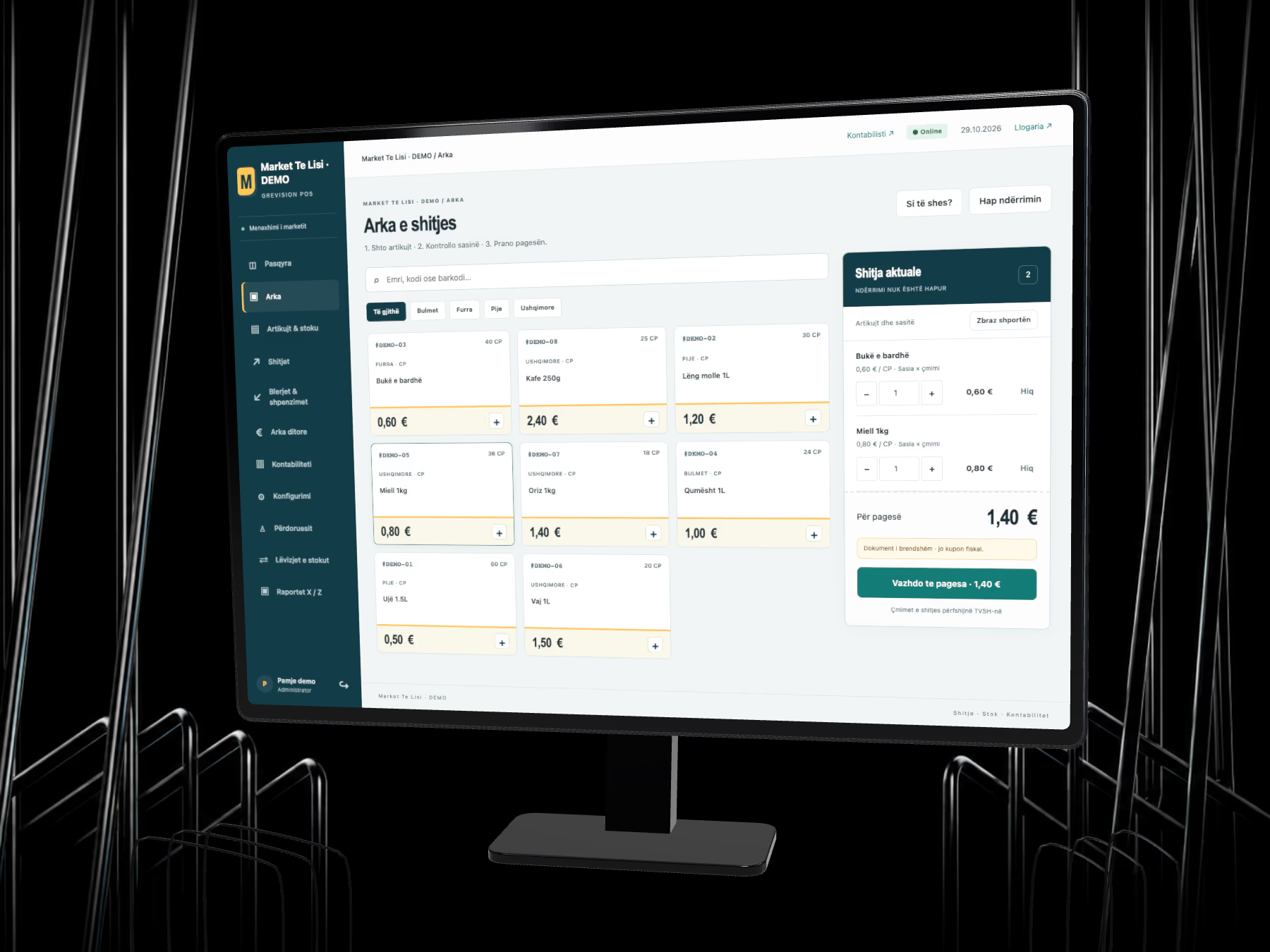
Market Te Lisi POS illustrates retail workflows such as sales, stock and accounting views. Its recorded stack is Python, Django and JavaScript, including a Windows client. Use it to discuss business requirements; it is not presented as a .NET or Node.js benchmark.
Market Te Lisi POSCompare the work included in each proposal
A platform name does not define a complete offer. Compare the same user journeys, content, language versions, integrations and acceptance conditions. Identify the work your team will supply, including approved text, assets, test data and access to existing systems. A useful proposal separates the first release from later improvements and makes open questions visible.
Agree how the product will be operated
Before development, agree who owns the hosting accounts, release decisions and maintenance requests. Clarify repository access, deployment, documentation and the handover expected by your team. Third-party services, licenses, subscriptions and ongoing support need their own responsibilities and scope. Pricing is negotiable for each project after we review the requirements; this comparison is not a quotation or a savings forecast.
Take a project brief to your next conversation
Download an editable brief with scope and supplier questions. Use it with your team, then send us the requirements you want to discuss.
Editable text file · No registration
Discuss your technology choice
Share the product you want to build, the systems you already use and the constraint that matters most. We can discuss the tradeoffs, agree what needs investigation and prepare a project proposal.
Pricing is negotiable for each project. We agree the quote after discussing your requirements and the scope of work.
.NET vs Node.js for Business Application Backends
info@grevision-ks.com